Dry skin is about more than a lack of moisture. Everyday factors such as weather, hot showers, and frequent washing can weaken the skin's natural barrier, making it more difficult to retain hydration. That's why caring for dry skin often requires a lotion that supports both moisture and barrier health.
Dry skin is commonly affected by:
- Environmental conditions. Cold weather, low humidity, and sun exposure can leave skin feeling rough, flaky, or tight.
- Daily habits. Long, hot showers and frequent cleansing may remove some of the skin's natural oils, increasing the need for consistent moisturizing.
- A weakened moisture barrier. When the skin barrier is compromised, moisture escapes more easily, making skin feel dry and less comfortable. A natural body lotion for dry skin can help replenish hydration as part of your everyday routine.
Supporting dry skin starts with understanding why it loses moisture in the first place. Choosing a lotion that works with your skin's natural barrier can help keep it feeling softer and more comfortable over time.
What Should a Body Lotion Do for Dry Skin?
A body lotion should do more than provide temporary moisture. For dry skin, the goal is to help replenish hydration, support the skin's natural barrier, and leave skin feeling comfortable throughout the day. Choosing a formula that addresses these needs can make a noticeable difference with consistent use.
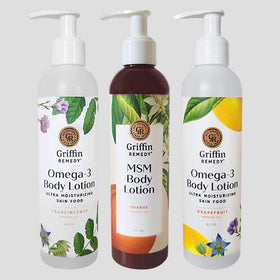
Hydration is only one part of the equation. A natural moisturizer for dry skin should also help support the skin barrier so moisture stays where it's needed. Griffin Remedy's Omega-3 Unscented Body Lotion is formulated with omega-3 oils and MSM to support barrier function while providing lasting hydration for dry, compromised skin.
Comfort matters, too. A lotion that absorbs well and fits easily into your daily routine is more likely to become a habit. Applying body lotion after bathing, while your skin is still slightly damp, can help maximize moisture and keep dry skin feeling softer over time.
Finding the Right Natural Moisturizer for Your Skin
The best natural lotion for dry skin is one that fits your skin's needs and your daily routine. Rather than focusing on a single feature, consider how the lotion supports hydration, how it feels on your skin, and whether it's a formula you'll enjoy using consistently.
When comparing lotions, consider:
- Your skin's moisture needs. If your skin often feels rough, flaky, or tight, look for a natural moisturizer for dry skin that helps replenish hydration and supports your skin's natural barrier.
- Your fragrance preference. Some people prefer fragrance-free lotions, while others enjoy naturally scented formulas made with essential oils. Choosing a scent you're comfortable with can make it easier to maintain a daily moisturizing habit.
- The overall formulation. A plant-based body lotion dry skin routine may appeal to those who prefer vegan formulas made with thoughtfully selected ingredients that support everyday skin care.
If you're comparing different options, Griffin Remedy's Body Lotion Collection includes body lotions designed to suit a variety of skin needs and personal preferences.
Healthy Skin Starts with Daily Care
Dry skin rarely improves with occasional moisturizing alone. Consistent daily care helps your skin stay hydrated and comfortable, especially when your routine includes products that support your skin's natural moisture barrier.
One of the easiest habits to build is applying body lotion after bathing. Gently pat your skin dry, then moisturize while it's still slightly damp to help lock in hydration. Making this part of your everyday routine can help keep dry skin feeling softer and more comfortable throughout the day.
At Griffin Remedy, we've spent over three decades creating clean, vegan body care products that fit naturally into everyday routines. Our approach has always been to develop thoughtfully formulated products that help people care for their skin with confidence, consistency, and quality.
Sources:
- Proksch, E., Brandner, J. M., & Jensen, J.-M. (2008). The skin: An indispensable barrier. Experimental Dermatology, 17(12), 1063–1072. https://doi.org/10.1111/j.1600-0625.2008.00786.x
- Levin, J., & Maibach, H. I. (2005). The correlation between transepidermal water loss and percutaneous absorption: An overview. Journal of Controlled Release, 103(2), 291–299. https://doi.org/10.1016/j.jconrel.2004.11.035
- Draelos, Z. D. (2018). The science behind skin care: Moisturizers. Journal of Cosmetic Dermatology, 17(2), 138–144. https://doi.org/10.1111/jocd.12490