Most conditioners are formulated for the hair shaft, not the skin beneath it. That's a problem, because your scalp is skin, and skin has its own needs: barrier repair, moisture balance, and relief from irritation. When a conditioner only coats strands and never addresses what's happening at the root, flaking, tightness, and buildup keep coming back, no matter how often you wash.
A targeted scalp conditioner works differently. Instead of just softening hair, it's formulated to calm inflammation, support a healthy moisture barrier, and clear the kind of residue that clogs follicles over time. Synthetic silicones and sulfates are common culprits here, since they coat the scalp rather than nourish it.
This is where Griffin Remedy's scalp therapy conditioner earns its place in a daily routine. Built with tea tree and organic aloe vera, it's formulated to soothe irritation while conditioning hair from root to end, treating scalp health as the foundation, not an afterthought.
Signs You Need A Conditioner For Itchy Scalp Relief
If you're scratching your head more than once a day, your scalp may be trying to tell you something. Here's how to know when you might benefit from a conditioner for dry scalp or discomfort.
Persistent Itching
A dry scalp can itch, but persistent or constant scalp itching may have several causes, including dandruff, eczema, psoriasis, contact dermatitis, or infection. If symptoms persist, seek dermatologic advice.
Flakiness That Won't Go Away
Dry scalp can cause small, dry flakes, while dandruff is often linked to seborrheic dermatitis and Malassezia yeast. Because symptoms overlap, persistent flaking, redness, itching, or scaling should be evaluated by a dermatologist.
Tightness or Sensitivity After Washing
If your scalp feels tight, sensitive, or uncomfortable after shampooing, your routine may be too stripping. A conditioner for dry scalp may help replenish moisture.
The Best Conditioner For Scalp Health And Balance
Scalp health isn't just about avoiding flakes; it's about balance. Too much dryness, ongoing irritation, or a disrupted scalp environment can all show up as the same frustrating symptoms: itching, tightness, and flaking that keep coming back no matter how often you wash. A good scalp conditioner isn't chasing one symptom; it's addressing the root causes so those problems stop resurfacing.
That's exactly what Griffin Remedy's Scalp Therapy Conditioner is built to do. Formulated with organic aloe vera extract and tea tree oil, it targets fungal overgrowth, inflammation, and dryness at once, the three root causes of most scalp discomfort.
Aloe vera calms redness and sensitivity while hydrating without clogging pores, and tea tree oil's natural anti-fungal properties help reduce flaking at the source. The formula also includes MSM, willow bark extract, and saw palmetto to further support scalp tissue and gently clear away the dead skin that contributes to buildup.
How To Use Scalp Conditioner For Best Results
Getting real relief from a scalp conditioner comes down to how and how often you use it. Here's how to get the most out of Griffin Remedy's Scalp Therapy Conditioner:
Apply After Shampooing, Focused On The Scalp
Start with clean, damp hair, ideally after using a scalp-focused shampoo like Griffin Remedy's Scalp Therapy Shampoo. Massage the conditioner directly into the scalp rather than just running it through the lengths. This is where the active ingredients, like tea tree oil and aloe vera, need to make contact to do their job.
Let It Sit For 1–2 Minutes
Give the formula time to penetrate before rinsing. A short 1–2 minute pause is enough for the anti-inflammatory and anti-fungal actives to start working on irritation and buildup at the root.
Rinse Thoroughly
Rinse completely to avoid residue at the scalp, which can contribute to buildup over time. A thorough rinse also keeps hair feeling light rather than weighed down, even with moisturizing ingredients like coconut oil and castor oil in the formula.
Use 2–3 Times Per Week
For active symptoms, itching, flaking, or tightness, consistency matters more than intensity. Using it 2–3 times weekly gives the scalp steady support without over-conditioning. Once symptoms calm down, this can be scaled back to once a week for maintenance.
Extend The Treatment When Needed
For deeper relief, the conditioner can be left on for 5–10 minutes instead of the standard 1–2. This extended contact time gives tea tree oil and aloe vera more opportunity to work on stubborn irritation or flaking.
Choose The Right Formula For Your Specific Hair & Scalp Concerns
Not all scalp conditioners are built the same. Match the formula to your concern for better results.
For Dry, Flaky Scalps
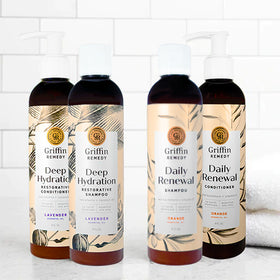
Choose a conditioner rich in organic oils and shea butter. Our Daily Renewal Conditioner hydrates and supports the scalp's moisture barrier. Browse our full natural conditioner collection to find the right match for your hair type.
For Itchy, Irritated Scalps
Look for soothing ingredients like aloe vera and tea tree oil. Our scalp therapy conditioner is designed to calm discomfort and restore balance to a reactive scalp.
For Fine Hair That Needs Volume
Use a lightweight formula with soy protein. Our Volumizing Conditioner conditions the scalp and adds body to the hair. Explore our broader hair care collection for complementary products that support your full routine.
Shop Griffin Remedy Scalp Conditioners Today
If your scalp has been asking for more than a quick rinse, it's time to give it a formula built specifically for the job. Griffin Remedy's Scalp Therapy Conditioner is formulated with organic aloe vera and tea tree oil to calm irritation, reduce flaking, and moisturize without weighing hair down, all while nourishing the scalp with MSM, willow bark extract, and saw palmetto.
It's 100% natural, vegan, cruelty-free, sulfate-free, and paraben-free, and it's available in 8oz, 32oz, and gallon sizes, so you can build it into your routine at whatever scale works for you. Pair it with our scalp therapy shampoo for maximum relief, or shop the conditioner on its own and start giving your scalp the targeted care it's been missing.