



Key Takeaways:
- Breakage Has Multiple Causes: Heat, chemicals, mechanical damage, and nutrition gaps all contribute to weakened strands that snap before reaching their potential.
- Breakage And Shedding Are Not The Same: Telling them apart is the first step toward choosing the right solution for your hair.
- The Right Routine Repairs And Protects: Clean, nourishing formulas reduce the daily stress that leads to breakage over time.
Breakage is one of the most frustrating hair concerns because it mimics slow growth. Hair grows from the root at a steady pace for most people, but when the ends constantly snap off, length never seems to accumulate. The issue is rarely how fast your hair grows. The issue is what is happening to it before that growth becomes visible.
At Griffin Remedy, we have spent 30 years formulating clean, botanical hair care built on a simple belief: healthy hair starts at the scalp and is maintained through every step of the routine. We understand the structural science behind strong strands and the habits that quietly undermine them.
This article covers the most common causes of hair breakage, how to distinguish it from shedding, habits that prevent further damage, and the products that support genuine repair.
The Most Common Causes Of Hair Breakage
Understanding what causes hair breakage is the foundation of any effective repair strategy. Most breakage comes from a combination of sources rather than a single culprit.
Mechanical Damage From Daily Styling
Aggressive brushing, detangling dry hair, tight elastics, and rough towel drying all create physical stress on the hair shaft. Over time, this repeated friction compromises the cuticle layer that protects each strand's inner structure. Once the cuticle is damaged, the cortex underneath becomes vulnerable to further breakage with even minimal daily manipulation.
Chemical Treatments And Their Lasting Effects
Coloring, bleaching, relaxing, and perming alter the internal structure of the hair shaft through chemical reactions. Each treatment weakens the overall integrity of the hair, and repeated chemical exposure compounds that damage significantly. Chemically processed hair requires more intensive moisture and protein support between treatments to resist snapping under normal handling.
Heat Styling Without Proper Protection
High temperatures cause the water inside the hair shaft to heat rapidly, weakening the strand from the inside out. Without a heat protectant to slow that moisture loss, regular heat styling creates cumulative brittleness, split ends, and mid-shaft breakage. The higher the temperature and the more frequent the use, the faster structural damage accumulates.
Nutritional Gaps That Weaken Strands
Hair is a protein structure, and without adequate dietary protein, the body deprioritizes keratin production. Iron deficiency restricts oxygen delivery to follicles, producing weaker strands from the start. Breakage that does not respond to topical treatments is often rooted in a nutritional gap no external product can fully compensate for.

Hair Breakage Vs Shedding — Knowing The Difference
Hair breakage vs shedding are two distinct issues that require different responses. Treating one when you have the other leads to frustration and wasted effort.
How To Identify True Breakage
Broken strands are shorter than a full hair length and have no bulb at the end. They appear at the ends, mid-shaft, or anywhere damage is concentrated. Finding short pieces in your brush or shower drain is a clear signal of breakage rather than shedding.
What Normal Shedding Actually Looks Like
Healthy hair sheds between 50 and 100 strands daily as part of the natural growth cycle. Shed hairs have a small bulb at the root end, indicating the hair completed its cycle and released naturally. Shedding within that range is not a problem, regardless of how alarming it looks gathered in a brush.
Why Confusing The Two Leads To Wrong Solutions
Someone treating shedding as breakage may add heavy protein treatments that create unnecessary brittleness. Someone treating breakage as shedding may wait for the problem to resolve on its own, allowing further damage to accumulate. Identifying which issue is actually present makes every product decision more targeted and effective.
When To Take It More Seriously
Sudden increases in shedding after illness, hormonal changes, or significant stress may indicate a condition worth discussing with a dermatologist. Breakage that persists despite routine changes may point to structural damage that requires a more intensive repair approach before length retention becomes realistic.
How To Stop Hair Breakage With Smarter Habits
Small adjustments to daily habits reduce the mechanical stress that drives most breakage. These changes protect the progress made by any treatment or product.
- Adjust Your Wash And Dry Routine: Detangle before washing, not after. Pat hair dry with a microfiber towel rather than rubbing. Never brush hair when it is soaking wet, as the shaft is most vulnerable to stretching and snapping at that point.
- Detangle With Care And The Right Tools: Start from the ends and work upward in small sections with a wide-tooth comb. Forcing a brush through dry, tangled hair from root to tip is one of the fastest ways to generate breakage across the entire length.
- Protect Hair While You Sleep: Cotton pillowcases create friction against the hair shaft throughout the night. Switching to silk or satin eliminates hours of nightly friction that compounds into real breakage over weeks and months.
- Give Your Hair Regular Recovery Time: Spacing out chemical treatments, reducing heat frequency, and incorporating deep conditioning gives the hair structure time to recover between stressors. Overloading already-damaged hair without recovery time accelerates the breakage cycle.

Products That Help Repair Breakage-Damaged Hair
Learning how to repair breakage damaged hair involves both better habits and cleaner products. These picks from our Hair Care Collection are formulated to reduce daily stress and support stronger strands.
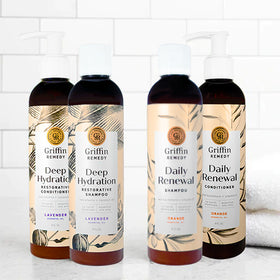
Deep Hydration Restorative Shampoo & Conditioner
This duo is formulated to replenish moisture and support strand strength, helping reduce the dryness and brittleness that often lead to breakage. Used together, they cleanse and condition without stripping hair of the moisture it needs to resist snapping.
Restorative Hair Mask
A deeper, intensive treatment designed to repair and reinforce damaged strands, the Restorative Hair Mask targets breakage at the structural level. Used periodically alongside the daily routine, it gives compromised hair the concentrated recovery time it needs.

Final Thoughts
Hair breakage is not inevitable. Once the causes are identified and the right habits and products are in place, most people see meaningful improvement within a few consistent weeks.
At Griffin Remedy, we formulate every product to support stronger, healthier hair at every step. Clean ingredients and botanical actives are the foundation of everything we make.
Explore our full hair care range and build the routine your strands actually need.
Frequently Asked Questions About What Causes Hair Breakage
What causes hair breakage at the ends?
Split ends, heat damage, and dryness are the most common causes of breakage concentrated at the hair ends.
How do I know if I have breakage or shedding?
Broken strands have no bulb and vary in length; shed hairs have a visible root bulb at one end.
Can over-conditioning cause hair breakage?
Yes, too much protein or heavy conditioning without balance can make hair brittle and more prone to snapping.
How long does it take to stop hair breakage?
With consistent habit changes and the right products, most people notice improvement within four to eight weeks.
Does the Deep Hydration Restorative Shampoo and Conditioner help with breakage?
Yes, the duo is formulated to restore moisture and support strand strength, helping reduce the dryness that contributes to breakage.
Is the Leave-In Treatment suitable for all hair types?
Yes, the ultra-light formula is designed for all hair types and adds strength without weighing strands down.

